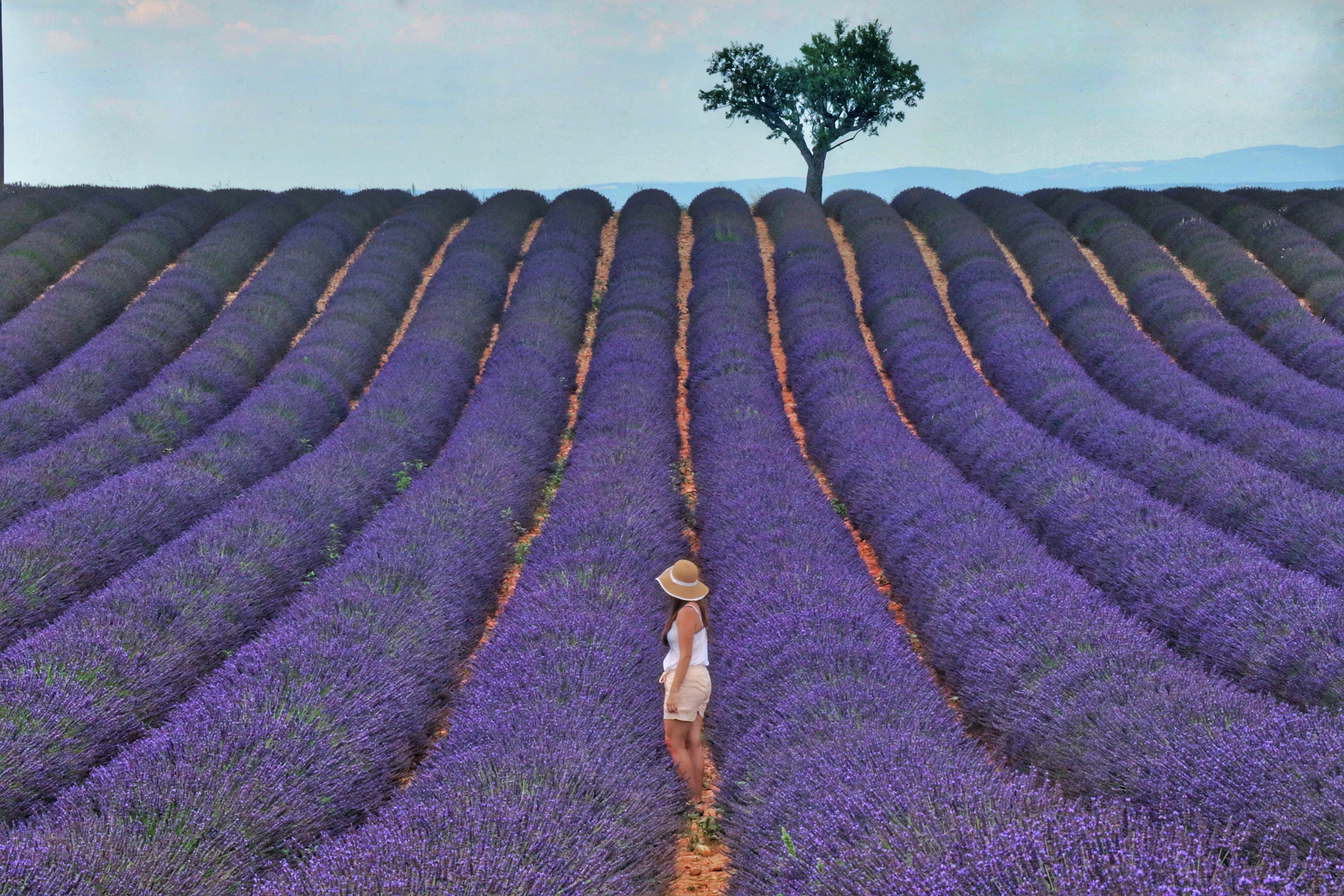
Provence · Plateau de Valensole · Alpes-de-Haute-Provence
Valensole Lavender Fields
The Valensole plateau in Provence — endless purple lavender rows in bloom. When to go, how to visit responsibly, and the best guided tours from Aix, Marseille & Nice.
5 Ways to See the Valensole Lavender
Choose How You Visit the Lavender Fields
The fields are free, open farmland with no entrance or tickets — but no public transport reaches them. These are the five ways travelers actually experience Valensole.
The Easiest Day Trip to the Fields
Aix is the closest major city — about an hour from the plateau. Half- and full-day guided tours run all bloom season, with photo stops in the fields and a working lavender-farm visit. The widest choice of departures.
Browse Aix Tours →Full-Day Trip from the Coast
About 90 minutes from the plateau. Full-day tours from Marseille pair the Valensole fields with a hilltop village or the Sault lavender route — ideal if you're based on the coast and want one big day in the lavender.
Browse Marseille Tours →Golden Hour in the Purple Rows
The fields are at their best in soft, low light — and almost empty in the evening. Sunset and small-group photo tours time your visit for the warm light photographers come to Valensole for.
Browse Sunset Tours →Pair the Fields with the Gorge
Valensole and the Gorges du Verdon sit side by side. Combo day tours add the turquoise Lac de Sainte-Croix and the cliffside village of Moustiers-Sainte-Marie — the most scenery you can fit into one day.
Browse Verdon Combos →Your Own Guide, Real Farms
Private tours adapt to your pace and your shot list, and the farm and distillery stops go behind the rows to show how lavender becomes oil. Best for photographers, couples, and small groups.
Browse Private & Farm →Timing Your Visit
When Do the Valensole Lavender Fields Bloom?
Lavender season is short and weather-dependent — getting the timing right is the single most important thing.
Peak bloom: late June to mid-July
On the Valensole plateau the lavender typically colours up from mid-June and peaks roughly from the last week of June through about July 10. A hot spring can push the peak a week or more earlier, so always check recent local field reports before you book a date.
Harvest ends the show by late July
Harvest usually begins around mid-July and is largely finished by early August. Once a field is cut, the purple is gone for the year — replaced by grey-green stubble. If you can only travel in August, ask whether higher, later-blooming areas are still standing.
Go early or late in the day
Midday on the plateau is hot, bright, and busy. Early morning and the hour before sunset give the soft light, the colour, and the bees at their calmest — which is exactly why sunset and photo tours exist.
Lavandin, not just "lavender"
Most of what you see at Valensole is lavandin — a robust hybrid grown for oil, with big rounded bushes and long uniform rows. True fine lavender grows higher up (above ~800 m) and blooms a little differently. Both are gorgeous; lavandin is what makes the famous Valensole stripes.
On the Plateau
How to Visit the Valensole Fields — Responsibly
These are working farms, not a park. A little etiquette keeps the fields beautiful for the grower and the next visitor.
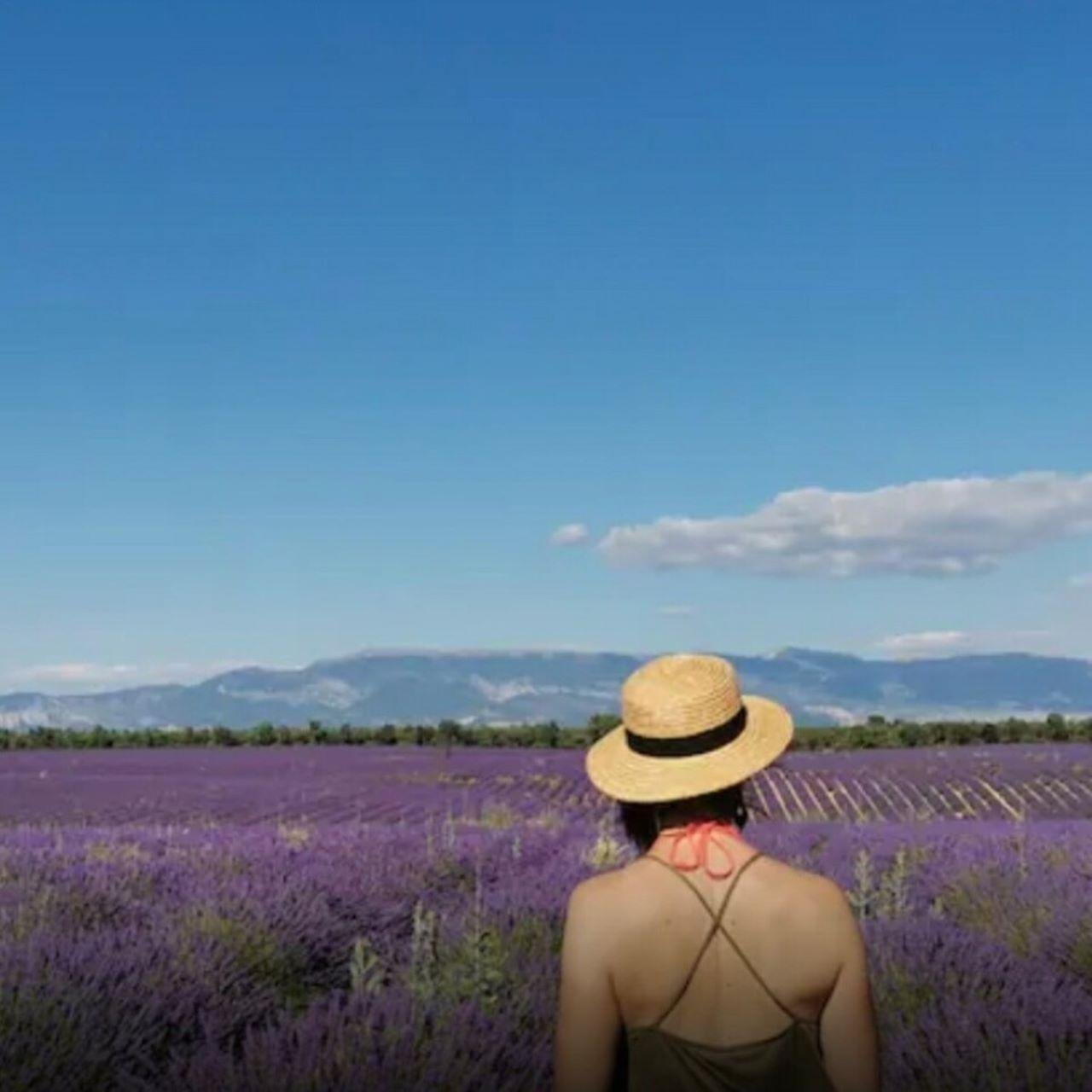
- Don't pick the lavender or walk into the rows. The plants are a crop; trampling and picking damage them and the harvest. Photograph from the edges and the tracks.
- The fields along the D6 (Manosque road) and D8 (Riez road) hold the densest, most photogenic rows and the well-known distillery viewpoints — but they're spread out, with no public transport, which is why most visitors go with a guide or by car.
- Mind the bees. Lavandin in bloom is alive with honeybees. They're focused on the flowers, not on you — move slowly, don't swat, and keep small children close.
- Take nothing but photos. Carry out your litter, don't fly drones over working fields without permission, and park only in designated areas so you don't block farm access.
Where the Valensole lavender fields are
The Plateau de Valensole sits in the Alpes-de-Haute-Provence department of Provence, in southeastern France, ringed by the small towns of Valensole, Riez and Puimoisson. At around 500–600 metres of altitude, this gently rolling plateau is one of the largest lavender-growing areas in the world — and from late June it turns into the rolling purple corduroy that has become the postcard image of Provence.
It’s roughly an hour from Aix-en-Provence, about 90 minutes from Marseille, and around two and a half hours from Nice — which is why almost every visitor arrives either by car or on a guided day tour. There is no train to the fields and no village bus that drops you in the lavender.
Lavandin vs. true lavender — why it matters
What gives Valensole its famous uniform stripes is mostly lavandin, a hardy hybrid grown for essential-oil yield. Its bushes are large and rounded, with several flower spikes per stem, planted in the long even rows that photograph so well. True (fine) lavender is a different plant — smaller, with a single spike per stem — and it grows higher up in the hills above roughly 800 metres. Both are lavender; lavandin is simply what most of the Valensole plateau is planted with.
More than the fields: Verdon, Lac de Sainte-Croix & Moustiers
Valensole sits right next to the Gorges du Verdon, Europe’s grandest river canyon, and the turquoise Lac de Sainte-Croix reservoir at its mouth — about half an hour east of the plateau and a favourite swimming and boating stop. On the canyon’s edge perches Moustiers-Sainte-Marie, a clifftop “most beautiful village” known for its faïence ceramics and the gold star strung between two peaks above it. The combination is why so many tours pair the lavender with a Verdon-and-Moustiers loop — you can see the fields, the gorge and a storybook village in a single day.
Pick your way in
The lavender itself is free and open, but reaching the right fields at the right light is the hard part. Browse tours by your base — from Aix-en-Provence, from Marseille or from Nice — or by the experience you want: a sunset and photo tour, a lavender-and-Verdon-Gorge combo, or a private tour with a working farm visit.
Plan your lavender trip
Before you book, get the timing and the logistics right. Our complete guide to the lavender fields of Provence covers where they are and how to see them; when lavender blooms in Provence gives the bloom calendar by area and elevation; how to visit the Valensole lavender fields walks through driving routes, parking and field etiquette; and Valensole vs. Sault vs. Luberon helps you pick the right plateau for your dates.
Valensole Lavender Fields — Frequently Asked Questions
When to go, how to get there, and how to visit the Provence lavender plateau.
On the Plateau de Valensole the lavender typically colours up from mid-June and peaks roughly from the last week of June through about July 10. Bloom timing shifts year to year with the spring weather — a hot spring can bring the peak forward by a week or more — so check recent local field reports before booking a date.
Harvest usually begins around mid-July and is largely finished by early August. Once a field is cut, the purple is gone for the year, replaced by grey-green stubble. To see the fields in full colour, travel late June to mid-July.
They're on the Plateau de Valensole in the Alpes-de-Haute-Provence department of Provence, southeastern France, around the towns of Valensole, Riez and Puimoisson, at about 500–600 m altitude. It's roughly an hour from Aix-en-Provence, about 90 minutes from Marseille, and around 2.5 hours from Nice.
There is no train to the fields and no village bus that drops you in the lavender, so almost everyone arrives by car or on a guided day tour. Guided tours from Aix-en-Provence, Marseille and Nice handle the driving, the best fields, and a farm visit.
No. The fields are free, open farmland with no entrance fee or tickets. What you book is transport and a guide — a tour that gets you to the right fields at the right time, often with a working-farm visit included.
Start with your base: tours from Aix-en-Provence are closest and most numerous, Marseille and Nice are full-day trips. Then pick the experience — a sunset and photo tour for the best light, a Verdon Gorge combo for the most scenery, or a private tour and farm visit to go behind the rows.
Most of Valensole is planted with lavandin, a hardy hybrid grown for oil, with large rounded bushes in long uniform rows — that's what makes the famous stripes. True (fine) lavender is smaller, with a single flower spike per stem, and grows higher in the hills above about 800 m, blooming a little differently.
No. The fields are private, working crops. Picking and trampling damage the plants and the harvest. Photograph from the edges and the tracks, mind the honeybees working the flowers, and take your litter with you.
Valensole sits beside the Gorges du Verdon, Europe's grandest river canyon, with the turquoise Lac de Sainte-Croix at its mouth and the clifftop village of Moustiers-Sainte-Marie nearby. Many tours combine the lavender with a Verdon-and-Moustiers loop.
Early morning and the hour before sunset give the soft, warm light, the richest colour, and the calmest crowds and bees. Midday is hot, harshly lit and busy — which is why sunset and photo tours are so popular.
Generally yes, though they involve real driving time and hot, bee-busy fields at midday. Bring sun protection and water, keep small children close to the paths, and consider a half-day or private tour for younger kids.
Still have questions? Email us at info@valensolelavenderfields.com
Ready to See the Lavender in Bloom?
Start with the closest, best-stocked departures from Aix-en-Provence — or pick your own base above.
Guided day trips · Free cancellation on most tours · Instant confirmation